
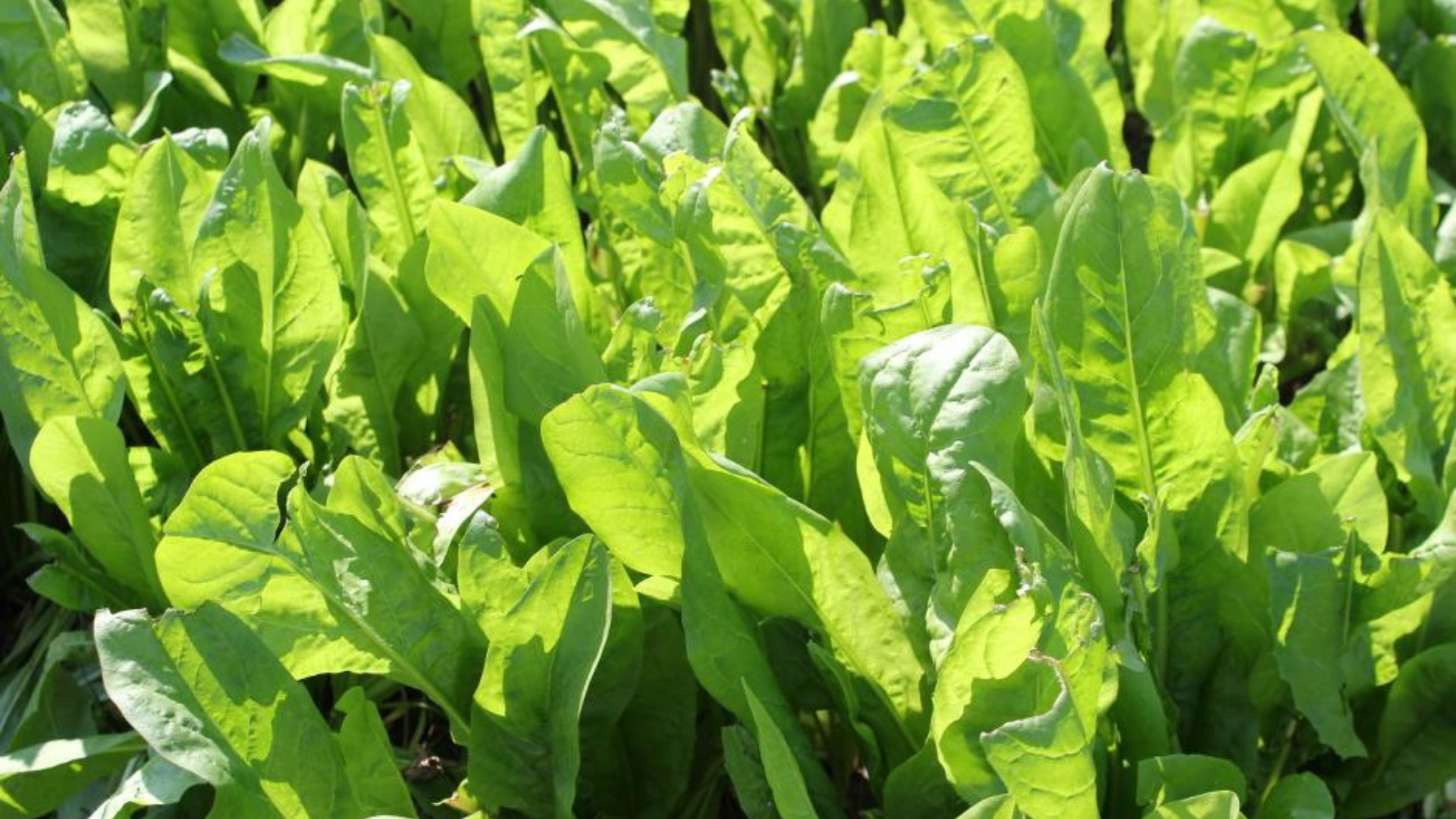
Victor Forage Chicory Seed
A fast-establishing, deep-rooted forage herb, chicory for high-quality spring, summer and autumn grazing in New Zealand dairy, sheep, beef and deer systems.
Victor Forage Chicory is a fast-establishing, leafy forage herb developed for productive rotational grazing in New Zealand farming systems. Its upright growth habit, high palatability and rapid recovery after grazing help sheep, cattle and deer efficiently utilise the available forage.
Victor produces high-quality feed through spring, summer and autumn, making it particularly useful for filling summer feed deficits when ryegrass growth and quality decline. Its deep taproot allows the plant to access moisture and nutrients deeper within the soil profile, providing greater resilience during dry conditions.
Victor can be sown as a specialist forage crop or included with ryegrass, clover and plantain in a diverse pasture mix. It is suitable for lamb and cattle finishing, dairy production, deer grazing and other systems requiring highly digestible summer feed.
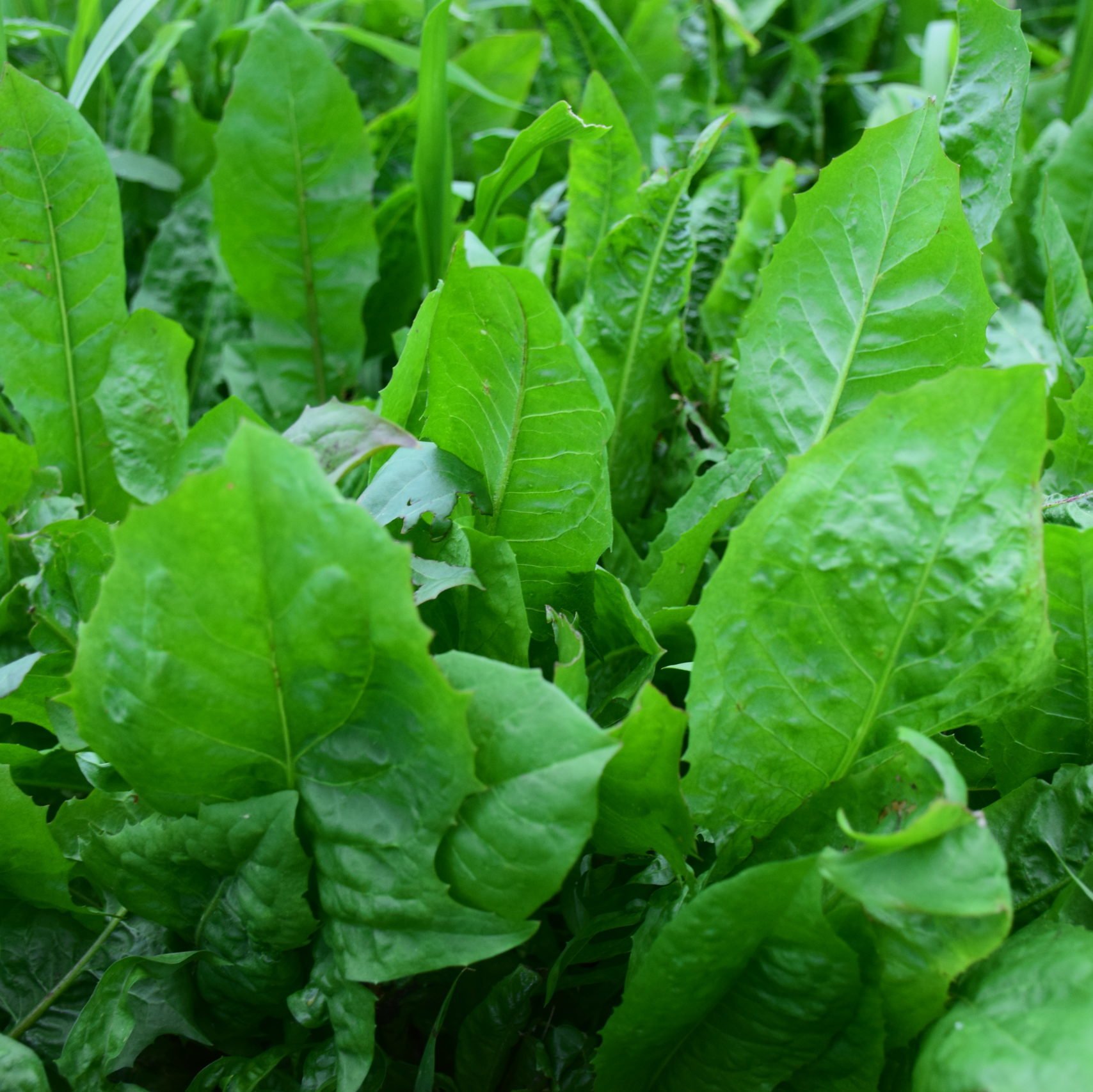
Chicory brings both performance and flexibility to modern New Zealand pasture systems. Its high digestibility and rich mineral profile make every bite count, helping animals convert feed efficiently and maintain condition even in tough summer conditions. Farmers value its rapid establishment and consistent regrowth, giving them a dependable forage option when other species struggle. Whether used as a standalone crop or mixed with ryegrass, clover, or plantain, chicory lifts overall feed quality and supports better daily gains. With strong persistence and excellent animal acceptance, it’s a proven way to keep productivity high and pasture planning simple season after season.
Victor Forage Chicory informationRecommendationPrimary useSpecialist summer forage crop or pasture-mix componentSuitable livestockDairy cattle, beef cattle, sheep and deerPure-stand sowing rate10–12 kg/haPasture-mix sowing rate1–2 kg/haMaximum sowing depth10 mm. Preferred sowing period: Spring, once soil temperatures are around 12°C and conditions provide adequate establishment moisture. Early autumn sowing may also be suitable in some regions where soil temperature and moisture allow. Once properly established and at no earlier than the seven-leaf stage. Post-grazing residual: Approximately 5 cm; avoid damaging the crown. Fertile, free-draining soil. Avoid poorly drained or regularly waterlogged paddocks. Preferred soil pH: approximately 5.6–6.2.
Why Farmers Use Chicory
Summer feed: Helps fill feed deficits when ryegrass growth and quality decline.
Animal performance: Highly palatable, digestible forage suited to dairy cattle, beef cattle, sheep and deer.
Dry conditions: Its deep taproot allows it to access moisture deeper in the soil profile than shallow-rooted pasture species.
Finishing stock: Particularly useful for lamb and cattle finishing where high-quality summer feed is required.
Flexible use: Sow as a specialist crop or include in pasture mixes with ryegrass, clover and plantain.
Building a Chicory Pasture Mix?
Choose your chicory, ryegrass, clover, plantain and other varieties, enter your hectares and sowing rates, and see an estimated seed cost per hectare on the spot.
FREQUENTLY ASKED QUESTIONS:
What is the recommended sowing rate for Victor Forage Chicory?
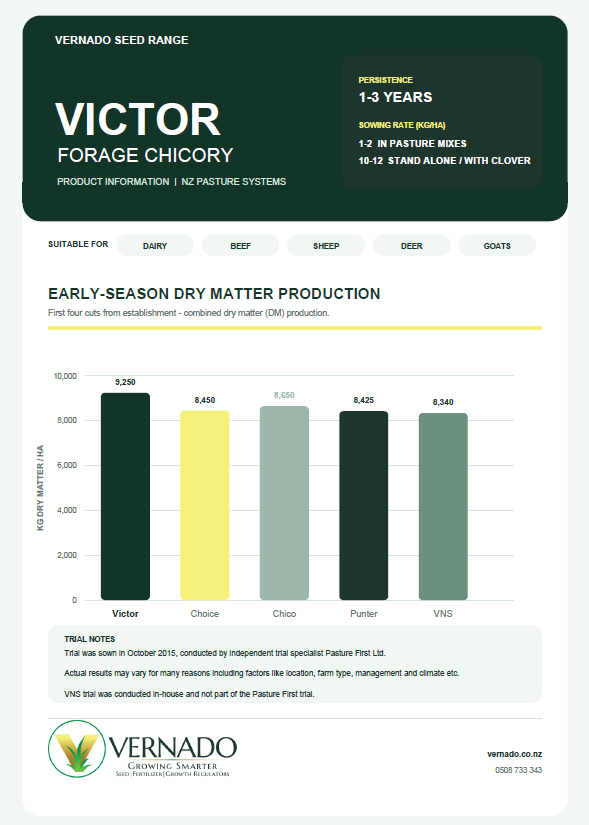
Victor is generally sown at 10-12 kg/ha as a pure stand or 1–2 kg/ha when included in a pasture mix. The appropriate rate will depend on the intended use, companion species, seedbed conditions and desired chicory content.
How deep should chicory seed be sown?
Chicory is a small seed and should be sown no deeper than approximately 10 mm. A fine, firm seedbed with good seed-to-soil contact supports more reliable and even establishment.
When should Victor Forage Chicory be first grazed?
Avoid grazing before the plants are properly established. As a general guide, chicory should reach at least the seven-leaf stage (or about 25–35 cm high) before its first grazing, allowing the taproot and crown to develop sufficiently.
Can Victor Chicory be mixed with ryegrass and clover?
Yes. Victor can be included with ryegrass, clover and plantain to improve pasture diversity and provide high-quality summer forage. Its management and persistence will depend partly on grazing pressure and competition from companion species.
Is forage chicory drought tolerant?
Victor’s deep taproot allows it to access moisture from deeper within the soil profile, making it more tolerant of dry conditions than shallow-rooted ryegrass. However, establishment and total production will still depend on soil moisture, fertility and management.
How long will forage chicory persist?
Persistence depends on soil conditions, pests, winter management and grazing pressure. Grazing too early, grazing below the crown, frequent grazing, wet-soil pugging and winter grazing can substantially reduce plant survival.
What Our Customers Say
-
![Text overlay on a grassy field background with a blue sky and clouds. The text discusses soil and pasture analysis, cow rotation, grass growth, and nutritional content related to cow grazing and pasture management.]()
Dairy Farmer Waikato

Suggested Products
Plantain
Italian Ryegrass
