
What Is Pugging?
Pugging occurs when livestock tread wet soils and their hooves deform the surface, creating holes and compacting the soil. While the damage is obvious above ground, much of the real cost lies beneath the surface.
Pugging affects:
· Soil structure
· Water infiltration
· Root growth
· Oxygen availability
· Nutrient cycling
· Pasture persistence
· Future carrying capacity
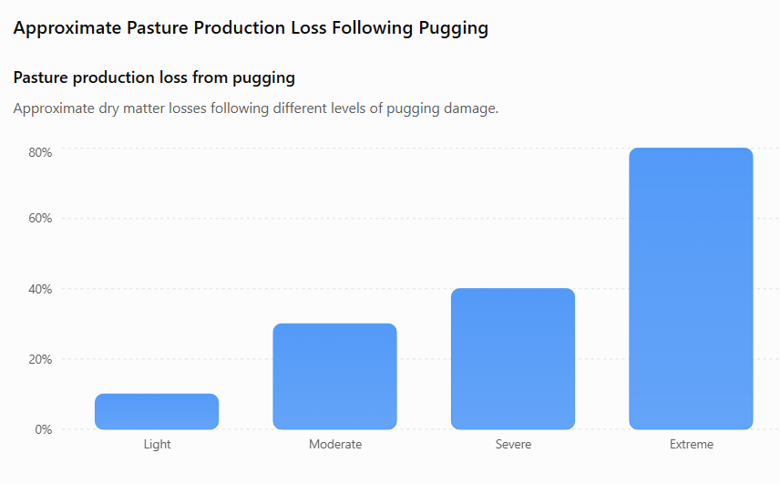
Severe damage can reduce pasture production for more than one season. Research from DairyNZ shows seriously pugged paddocks may yield around 40% less dry matter the following year if soil structure isn't repaired.
Why Pugging Costs More Than Most Farmers Realise
Most farmers see the hoof marks.
The bigger issue is what remains after the cows leave.
Pugging creates:
• Compaction layers
• Smeared soil surfaces
• Reduced pore spaces
• Poor drainage
• Oxygen starvation
• Slower root development
• Reduced tillering
• Weed invasion
• Lower clover content
• Reduced pasture persistence
Heavy surface damage covering 30-40% of a paddock effectively means 30-40% of the paddock is no longer producing feed.
A 1 ha paddock with 40% severe damage is effectively functioning like a 0.6 ha paddock.
What Happens Below Ground?
Healthy soil contains pores filled with air and water.
When stock repeatedly tread saturated ground:
Soil pores collapse
Water movement slows.
Oxygen levels fall
Roots struggle to breathe.
Soil biology declines
Microbial activity and nutrient cycling slow down.
Drainage gets worse
Water sits on the surface longer.
Future pugging risk increases
Once damaged, the paddock becomes increasingly vulnerable.
Signs Your Paddocks Have Been Pugged
Look for:
✓ Hoof holes holding water
✓ Smeared surfaces
✓ Bare soil patches
✓ Yellow or slow-growing grass
✓ Reduced clover
✓ Weed invasion
✓ Water sitting after rainfall
✓ Uneven grazing
✓ Compacted layers 5-15 cm below the surface
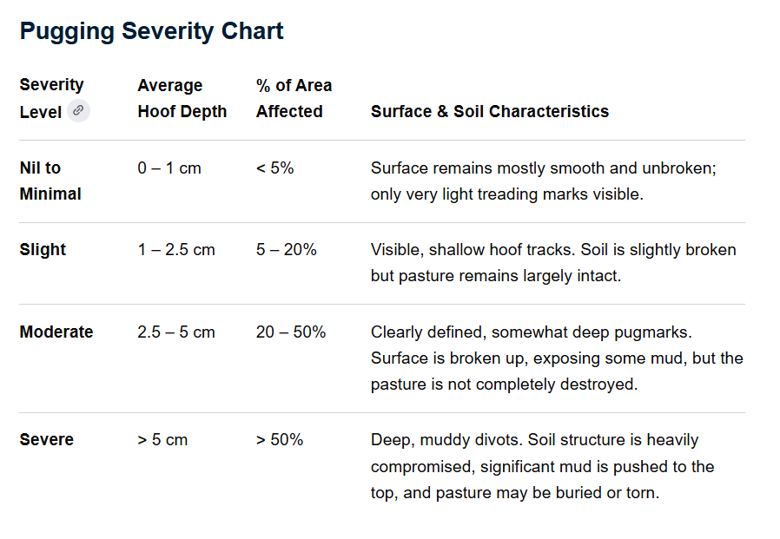
Which Soils Are Most Vulnerable?
Higher risk soils include:
Heavy clay soils
Poorly drained paddocks
Flat areas
High water-table soils
Gateway areas
Around troughs
Winter crop transitions
Feeding-out areas
How Much Production Can Be Lost?
Research has shown:
DairyNZ estimates that a paddock producing 14,000 kg DM/ha losing 40% production equates to 5,600 kg DM/ha lost, worth over $1,000/ha in feed value.
Preventing Pugging
Build Pasture Cover Before Winter
Longer pasture cushions hoof impact and protects the soil.
Use On-Off Grazing
Cows can consume most of their daily feed within 6-8 hours.
Standing animals off paddocks for the remainder of the day dramatically reduces damage.
Suitable stand-off areas include:
Feed pads
Woodchip pads
Races
Sacrifice paddocks
Loafing pads
Use Sacrifice Paddocks
Protect 95% of the farm by sacrificing 5%.
A planned sacrifice area is usually cheaper than repairing damage across the entire platform.
Back Fence
Temporary electric fencing prevents cows repeatedly walking over already grazed areas.
Rotate Gateways
Change entry and exit points to spread traffic.
Avoid Heavy Machinery
Tractors and feed wagons can create deeper compaction than stock.
Improve Drainage
Consider:
Mole drains
Tile drains
Open drains
Subsoil drainage
Surface contouring
How To Repair Pugged Paddocks
Light Damage
Roll and apply nitrogen
20-30 kg N/ha can stimulate tillering.
Often no reseeding is required.
Moderate Damage
Harrow and undersow
Fast establishing species include:
Italian Ryegrass
Fast feed and rapid establishment.
Severe Damage
Where compaction extends deeper:
Subsoil or aerate
Allow soil to dry before cultivation.
Direct drill or cross drill
Direct drilling preserves existing soil structure and reduces further damage.
Choosing the Best Seed for Pugging Recovery
Need feed fast?
· Fast establishment
· Excellent cool season growth
· 1-2 year life
Recommended:
Planning to crop later?
Annual ryegrass
· Rapid cover
· Cheap feed
· High winter production
Recommended:
Need 3-5 years of pasture?
Combines speed and persistence.
Recommended:
Permanent Dairy and Beef/Sheep Pasture Mix, or a custom mix for your requirements.
Sowing Recommendations & Rates
Bare Gaps (Gateways): Broad-cast or hand-sow at a high rate of 30-35 kg/ha to account for lower germination.
Thin/Damaged Pastures (Undersowing): Drill at 10–15 kg/ha for thin areas and up to 20–25 kg/ha for severe damage.
Fertilizer: Drill with 100-150 kg/ha of DAP or similar to give the new roots an immediate boost to compete with older grasses.
Method: Cross-drilling or diamond drilling using a 100-125mm coulter drill gives the quickest, most even establishment.
Want a long-term permanent solution?
Use densely tillering perennial ryegrasses and clover mixes to rebuild pasture density.
See our complete range:
https://www.vernado.co.nz/our-seeds
Pasture Recovery Mix
Too Wet To Drill?
Sometimes machinery simply can't travel.
Options include:
Drone seeding
Helicopter oversowing
Spinner spreading
Broadcasting followed by rolling
Waiting for conditions to improve
Fertiliser To Help Recovery
Following repair, applications of:
Nitrogen
Sulphur
Humates
Seaweed biostimulants
can help accelerate tillering and root growth.
The Takeaway
Pugging is more than a muddy paddock.
It is lost pasture production.
It is poorer drainage.
It is reduced soil biology.
It is lower carrying capacity.
And if ignored, it becomes a pasture persistence problem that compounds year after year.
The best solution isn't repairing pugging.
It's preventing it.
But when damage occurs, acting quickly with the right recovery strategy, drilling method and seed choice can turn a poor paddock back into productive feed much faster.
Frequently Asked Questions
What causes pugging?
Pugging occurs when livestock tread saturated soils, collapsing soil pores and damaging pasture plants.
How much pasture production can pugging reduce?
Severe pugging can reduce pasture production by 40-80%.
Will pugged pasture recover naturally?
Light damage often recovers with nitrogen and good management. Severe damage usually requires reseeding.
What is the best seed for repairing pugged paddocks?
Italian ryegrass provides the quickest recovery. Hybrid ryegrass offers a balance between speed and persistence.
Is direct drilling better than cultivation?
In many situations, yes. Direct drilling preserves existing soil structure and avoids further damage.
How long should repaired paddocks stay ungrazed?
Generally 4-6 weeks, or until the new plants pass the "pull test".
Can drone seeding repair pugged paddocks?
Yes. Drone and helicopter seeding can establish feed where machinery access is impossible.